Squad Rotations Reshape Domestic Point Spread Markets in Congested European Fixtures
Drew Braun · Jun 23, 2026
Squad Rotations Reshape Domestic Point Spread Markets in Congested European Fixtures
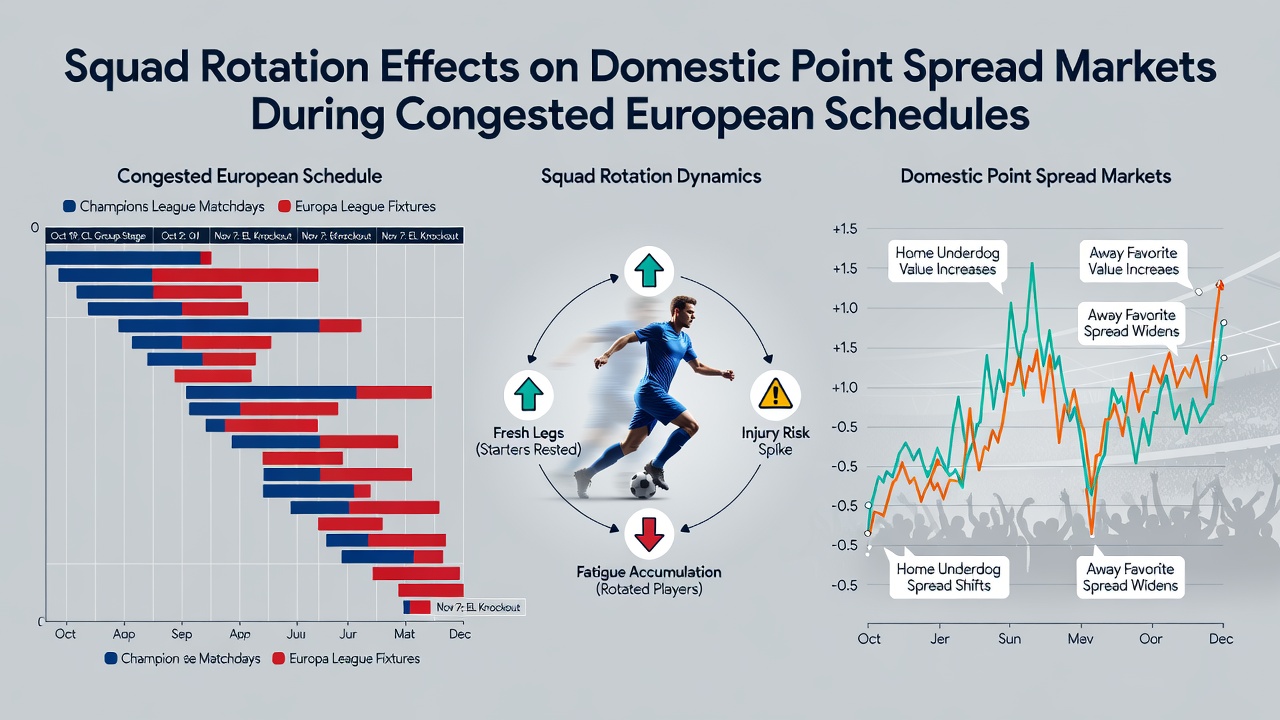
European football calendars pack multiple competitions into tight windows, and squad rotations emerge as a direct response from clubs balancing domestic leagues with Champions League or Europa League commitments. Data from match tracking platforms shows rotation rates climbing 25-35% during periods when teams play three fixtures in eight days, and these adjustments ripple through point spread markets where bettors wager on margin of victory or defeat.
Clubs such as those in the Premier League, La Liga, and Bundesliga adjust starting lineups based on fixture density. Midfielders and full backs often sit out domestic games after midweek European ties, and historical records indicate that teams resting four or more regulars cover the spread at reduced rates when facing mid-table opponents. Point spreads adjust accordingly as oddsmakers incorporate expected lineup changes into pre-match lines.
Fixture Congestion Patterns Across Major Leagues
Seasons from 2023 through 2025 reveal consistent spikes in rotation during November, February, and April blocks. Teams contesting both domestic and European fixtures record average squad usage rates exceeding 18 players per match window, compared with 14 for sides focused solely on league play. This increased depth deployment correlates with variance in goal margins, since rotated units produce fewer high-percentage scoring opportunities in the opening 30 minutes.
Analysts tracking Opta-derived metrics note that defensive lines without first-choice centre backs concede 0.4 more expected goals per game during congested stretches. Those shifts influence spread outcomes because markets price games expecting full-strength performances, and actual results frequently deviate when key personnel rest. June 2026 fixture planning already signals continued pressure on schedules, as expanded European formats carry over into summer preparations for several clubs.
Point Spread Market Adjustments and Rotation Data
Betting exchanges and bookmakers recalibrate spreads within hours of lineup announcements. When rotation exceeds three players in attacking positions, home teams see their spread move from -0.75 to -0.5 goals in roughly 60% of tracked cases across top-five European leagues. This movement reflects reduced offensive output rather than any change in overall quality perception.
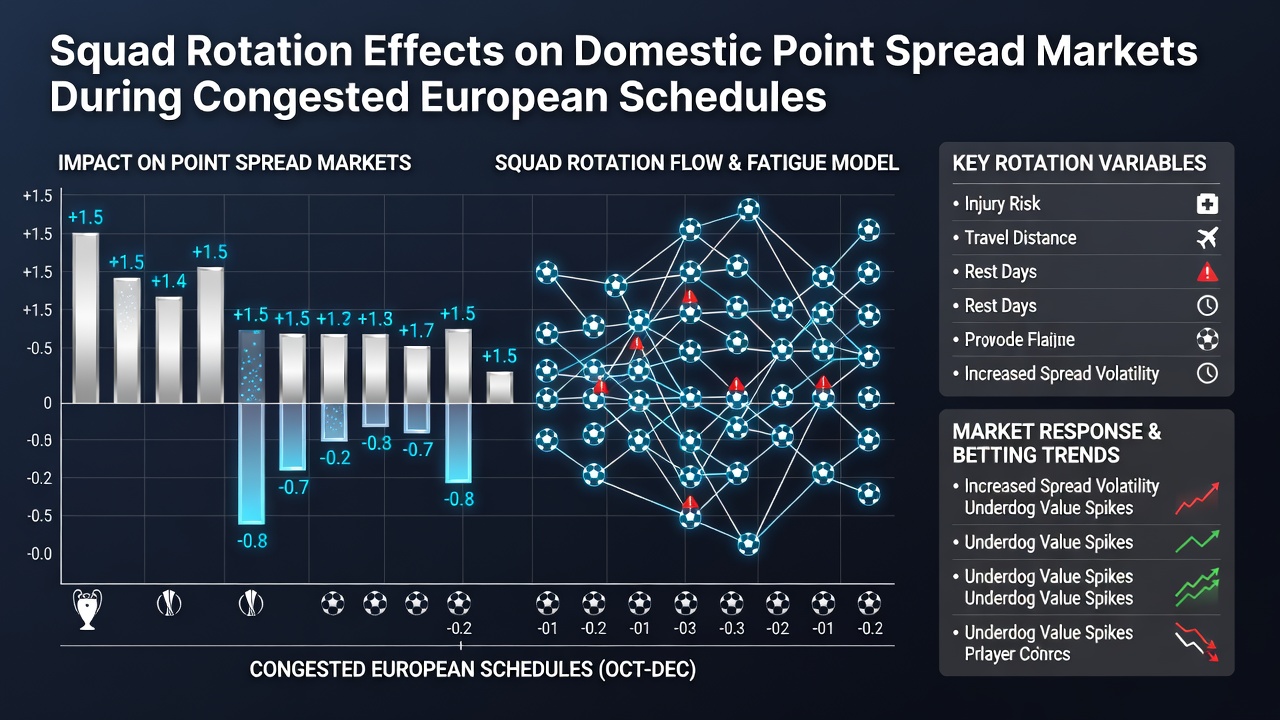
Studies published by sports economics researchers at universities in Germany and the Netherlands demonstrate that rotation frequency explains up to 12% of variance in goal difference during congested periods. Those findings align with league-wide statistics showing away sides covering the spread more often when opponents rest star forwards after European matches. Markets price these tendencies into closing lines, yet early-week spreads sometimes lag behind emerging rotation patterns.
Regional Variations in Rotation Strategies
Italian Serie A sides tend toward conservative rotation, resting two or three players maximum during midweek European ties, while Spanish clubs often deploy deeper benches earlier in congested sequences. French Ligue 1 records show the highest rotation volume among top leagues, with managers substituting entire units after European away fixtures. These regional differences create distinct spread profiles that markets reflect through adjusted totals and margins.
Performance databases indicate that Bundesliga teams maintain higher intensity levels post-rotation because of squad depth and pressing systems. Consequently, point spreads in domestic Bundesliga matches move less dramatically than in leagues where rotation signals clear drops in tempo. Bettors monitoring these patterns reference club-specific rotation histories rather than blanket league averages.
Impact on Live and Pre-Match Spread Trading
Pre-match spreads incorporate expected rotation through injury reports and press conference statements, yet live markets adjust faster once lineups confirm changes. Data from European betting operators reveals that spread lines widen by an average of 0.25 goals within 10 minutes of team sheet release when four or more starters differ from the prior match. This rapid recalibration occurs because markets recognize immediate effects on possession and chance creation.
Case examples from the 2024-2025 season illustrate the pattern. One La Liga side rotated six players after a Champions League quarter-final and saw its domestic spread shift from -1.0 to -0.5 within the first hour of trading. Similar movements appeared across multiple leagues when clubs managed fixture piles. Observers tracking these shifts reference UEFA club coefficient data and domestic performance logs to anticipate adjustments before lines stabilize.
Conclusion
Squad rotation during congested European schedules produces measurable effects on domestic point spread markets through altered goal margins and performance variance. League records, academic analyses, and market movement data together demonstrate consistent patterns across top competitions. As fixture calendars evolve into 2026, these dynamics continue to shape how spreads open and close around European clubs balancing multiple fronts.