International Breaks and Their Impact on Top-Flight Club Betting Markets
Xander Keller · Jul 23, 2026
International Breaks and Their Impact on Top-Flight Club Betting Markets
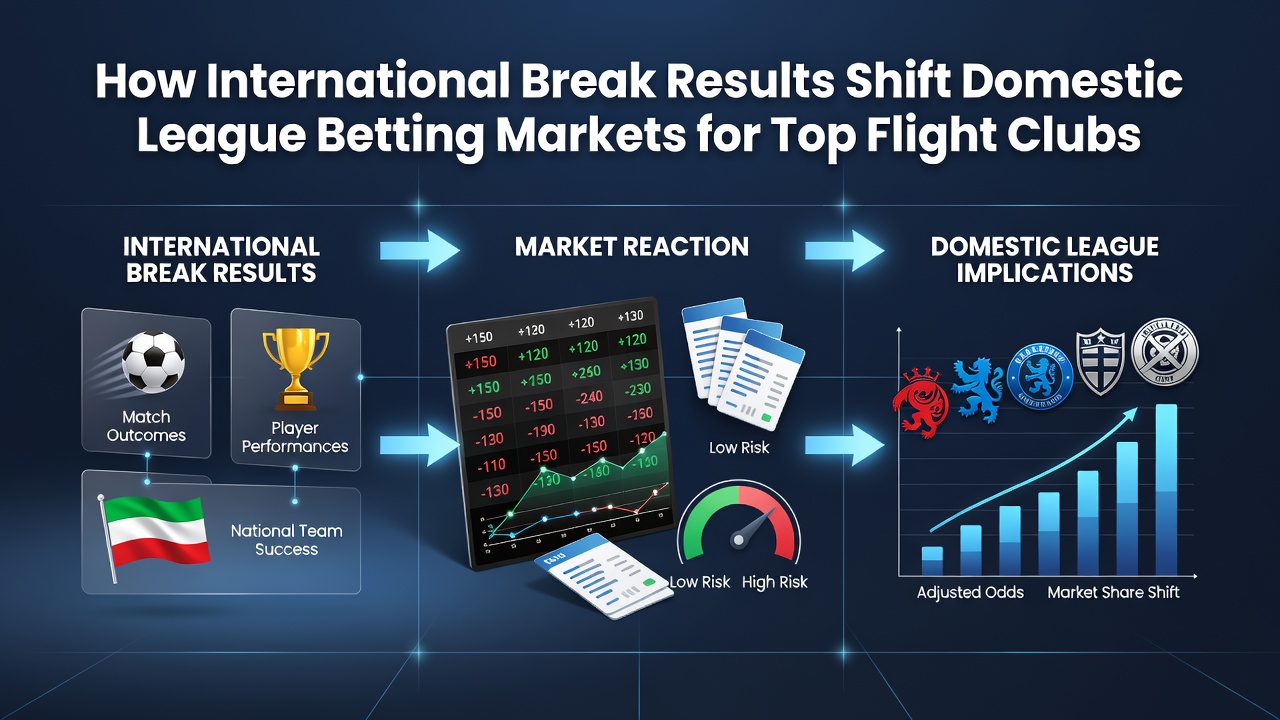
International breaks create distinct patterns in domestic league betting markets for top-flight clubs, as national team results feed directly into odds adjustments for upcoming club fixtures. Data from major European leagues shows that clubs with players returning from successful international campaigns often see their match odds tighten in the days following a break, while those dealing with fatigue or injuries experience the opposite shift.
Player Availability and Market Adjustments
National team performances during breaks influence club squad depth in measurable ways, since key players log significant minutes across continents before returning to domestic duty. Betting operators track these returns closely, with odds compilers incorporating data on travel distances, match intensity, and recovery windows. Research from sports analytics firms indicates that clubs relying on players from distant confederations face higher variance in post-break form, prompting market makers to widen spreads on totals and handicap lines.
Those who've monitored markets across multiple seasons note that early adjustments often occur within 24 hours of the final international match. European leagues scheduled for July 2026 resumption after the summer window will likely follow similar timelines, as operators integrate FIFA and confederation match reports into their models.
Form Carryover and Odds Movement
Results at national level translate into domestic betting shifts through several channels, including boosted confidence for in-form players and tactical familiarity gained against varied opposition. Studies conducted by university research groups in Australia have examined how goal-scoring streaks from international duty correlate with elevated expected goals in the first two club matches afterward. Bookmakers respond by nudging prices on player props and team totals accordingly.
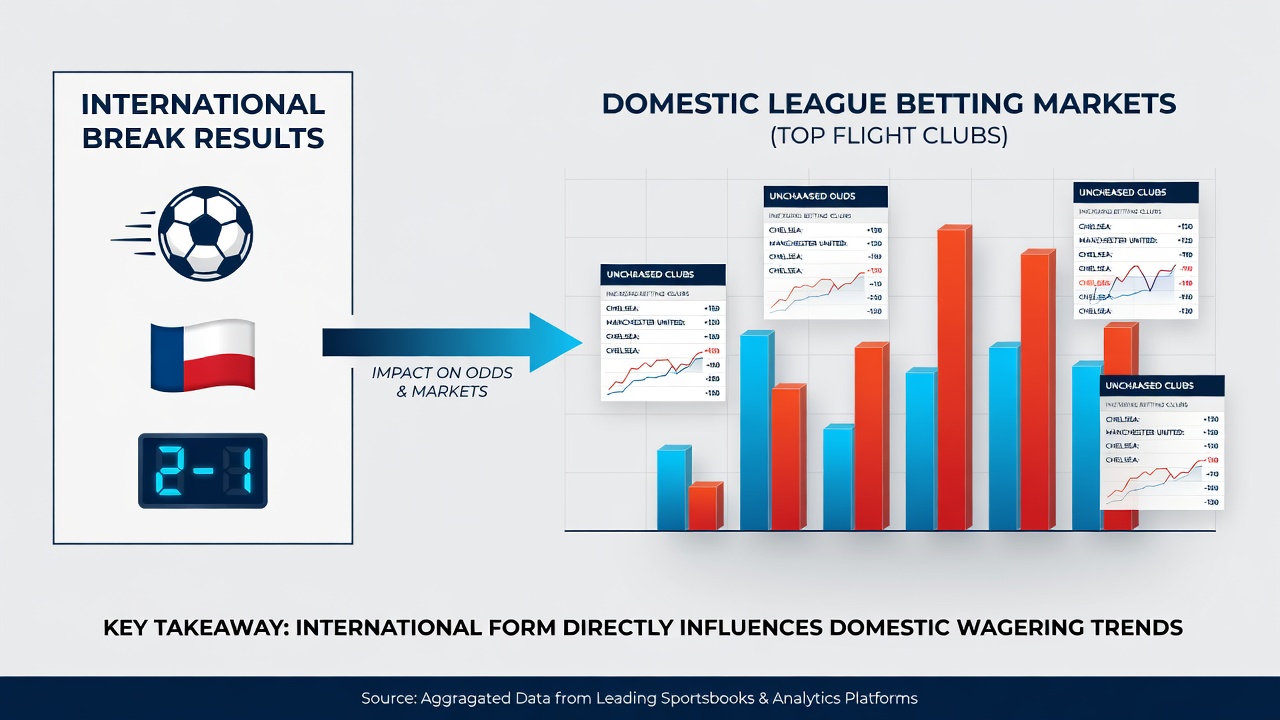
Yet the opposite pattern appears when national teams suffer heavy defeats or when star players exit early through injury. European data providers report that such outcomes frequently push club win probabilities downward in the immediate post-break window, creating temporary value on underdog lines. Observers tracking these movements across the Premier League, La Liga, and Bundesliga have documented average odds drifts of 0.15 to 0.30 in decimal terms for affected sides.
Regional Variations in Market Response
Betting markets in different regions react at varying speeds to international break data. North American operators, regulated under frameworks like those overseen by state gaming commissions, tend to delay major adjustments until more domestic training footage becomes available. In contrast, markets in Asia and Australia often move faster, incorporating real-time player tracking metrics from national team games.
Industry reports compiled by research institutions such as the University of Nevada, Las Vegas highlight how these timing differences create arbitrage opportunities for bettors who follow multiple jurisdictions. The same reports note that top-flight clubs in leagues with shorter recovery periods experience sharper initial swings before markets stabilize.
Accumulators and Multi-Match Implications
International break outcomes also ripple through accumulator markets, where bettors combine club results across several post-break fixtures. Data aggregated by European analytics platforms shows increased correlation between national team results and clustered outcomes in domestic rounds. Operators therefore adjust parlay payouts and limit maximum stakes on selections involving multiple clubs returning from the same international window.
Case examples from the 2025 season illustrate the point. Clubs whose players featured in high-stakes qualifiers saw their combined accumulator odds compress more rapidly than those with fewer international representatives. Market participants who monitor squad rotation announcements alongside national team lineups gain an edge in identifying where value persists before lines settle.
Conclusion
International breaks function as recurring inflection points for domestic league betting markets, with national team results feeding into club odds through measurable channels of player form, availability, and market timing. Data from multiple regions continues to demonstrate consistent, if varying, responses across operators. As the 2026 calendar unfolds, these dynamics will remain central to how top-flight club markets price the first post-break rounds.