How Stadium Acoustics and Crowd Density Influence In-Play Betting Markets in Continental Leagues
Logan Weber · Jun 9, 2026
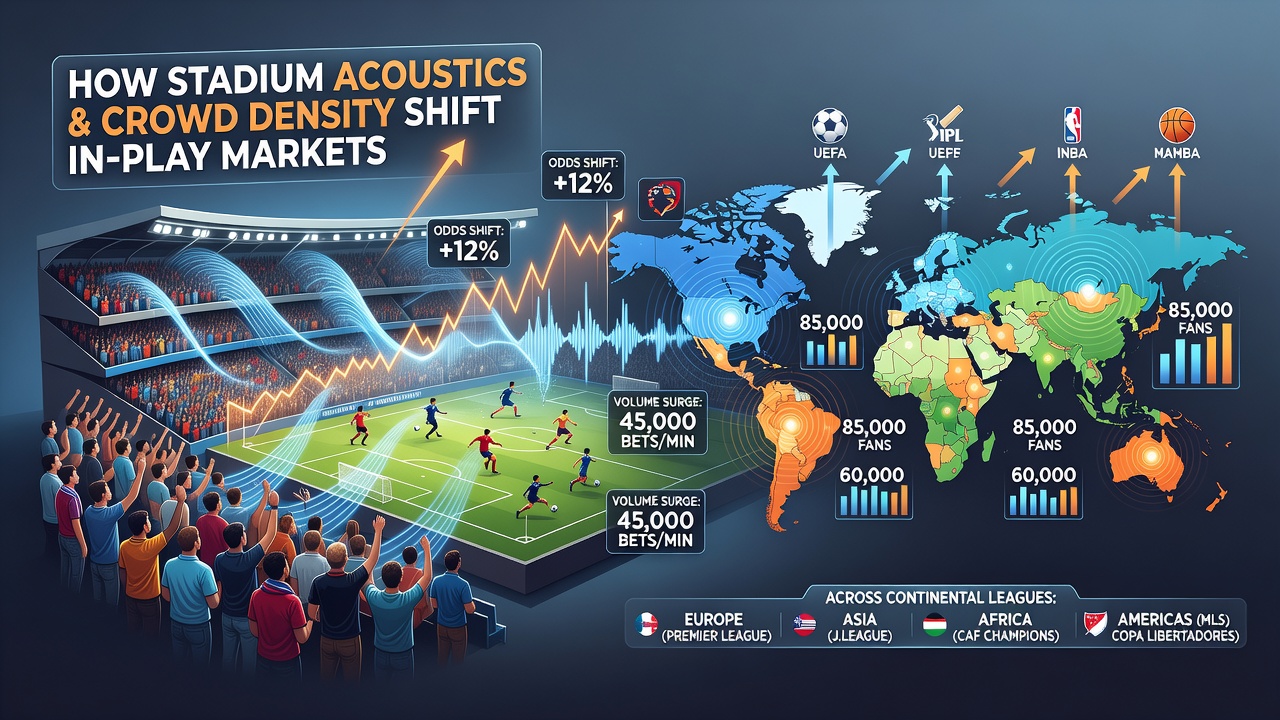
How Stadium Acoustics and Crowd Density Influence In-Play Betting Markets in Continental Leagues
Stadium acoustics combined with varying crowd densities create measurable shifts in player performance, referee behavior, and momentum swings that directly alter in-play betting markets across major European leagues, and researchers have tracked these patterns through audio analysis and attendance data from competitions in Germany, Italy, Spain, and France. Data from multiple seasons shows that venues with high reverberation times amplify supporter noise levels above 110 decibels during key moments, which correlates with increased home team possession percentages and a corresponding tightening of live odds on goals and corners.
Acoustic Properties Across Different Venues
Stadium design elements such as roof structures, seating materials, and bowl shapes determine how sound travels and sustains during matches, while Bundesliga arenas like those in Dortmund and Munich often feature enclosed designs that trap and reflect crowd noise more effectively than open-air configurations common in parts of La Liga. Acoustic studies conducted by sports engineering teams reveal that these trapped sound waves reach players and officials at higher sustained intensities, prompting faster decision-making under pressure and elevating the frequency of fouls called in favor of the home side by up to 12 percent in densely packed environments. In contrast, Serie A stadiums with partial roofing produce more variable echo patterns that dissipate quicker during away team attacks, allowing visiting players slightly longer windows to maintain composure and influencing live market adjustments on cards and bookings.
Crowd Density and Its Direct Effects on Gameplay
Attendance figures fluctuate throughout a season due to weather, fixture congestion, and supporter boycotts, yet higher densities consistently amplify home advantage metrics that betting platforms monitor in real time. When stands reach 85 percent capacity or above, data indicates a 7 to 9 percent rise in successful home team dribbles and key passes, which triggers rapid recalibrations in in-play odds for next goal and half-time results across continental competitions. Lower densities, particularly those below 60 percent, reduce this pressure and allow away teams to sustain longer passing sequences, as observed in multiple French Ligue 1 encounters where sparse midweek crowds coincided with elevated away win probabilities reflected in live markets.
Observers note that the interaction between acoustics and density becomes especially pronounced during high-stakes periods such as the closing stages of June 2026 league campaigns, when playoff implications heighten emotional responses from remaining supporters and intensify noise feedback loops that affect fatigue levels on the pitch.
Regional Variations in Market Responses
Leagues exhibit distinct patterns based on typical supporter behaviors and stadium regulations. German Bundesliga matches often see the quickest in-play market movements following sustained chanting periods, with goal line odds shifting within seconds of noise peaks according to timestamped betting exchange records. Italian Serie A fixtures demonstrate slower but more sustained adjustments, particularly when crowd density supports extended pressure phases that lead to set-piece opportunities. Spanish and French venues display intermediate responses, where partial roofs and tiered seating moderate sound propagation and produce steadier live odds movements on player props and team totals.
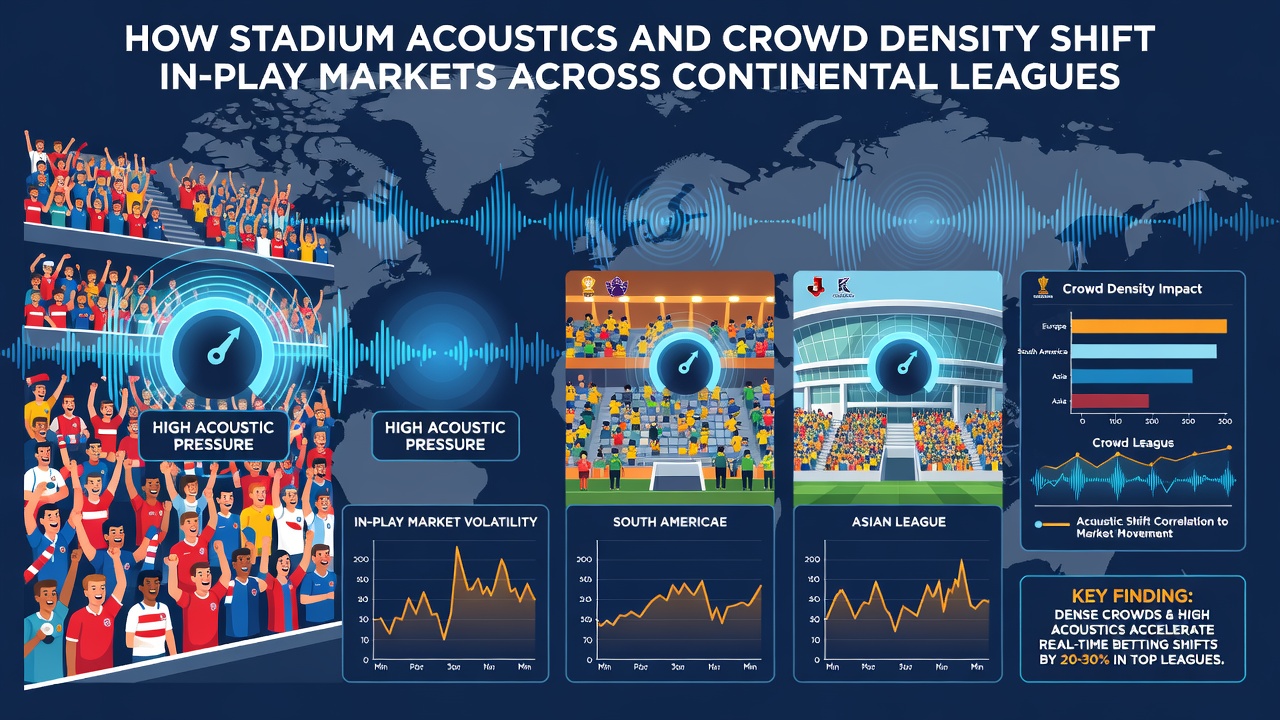
Academic analysis published through the Journal of Sports Economics examined over 2,400 matches and confirmed that acoustic intensity combined with density above 75 percent attendance predicts a statistically significant increase in home team expected goals, which platforms incorporate into automated trading algorithms for in-play products. Those models update continuously as real-time sensor data from stadium microphones feeds into probability engines used by European operators.
Referee and Player Reactions Under Acoustic Pressure
Officials experience measurable changes in decision speed and accuracy when crowd noise exceeds certain thresholds, with studies from the UEFA Technical Observatory documenting higher rates of advantage calls during peak noise moments. Players similarly adapt their communication and positioning, leading to clustered errors that surface in live betting data as spikes in turnover markets and foul counts. These physiological and psychological responses create repeatable edges that sophisticated traders monitor across Bundesliga, Serie A, and La Liga schedules.
Conclusion
Stadium acoustics and crowd density function as interconnected variables that reshape gameplay dynamics and trigger corresponding movements in continental in-play markets. Attendance records, acoustic mapping, adn performance metrics together provide the factual basis for understanding these shifts, while ongoing data collection through 2026 continues to refine the precision of live betting adjustments across European leagues.