How Midweek Fixture Overload Shapes Goal Timing Markets in Portugal's Primeira Liga
Vera Reed · Jul 26, 2026
How Midweek Fixture Overload Shapes Goal Timing Markets in Portugal's Primeira Liga
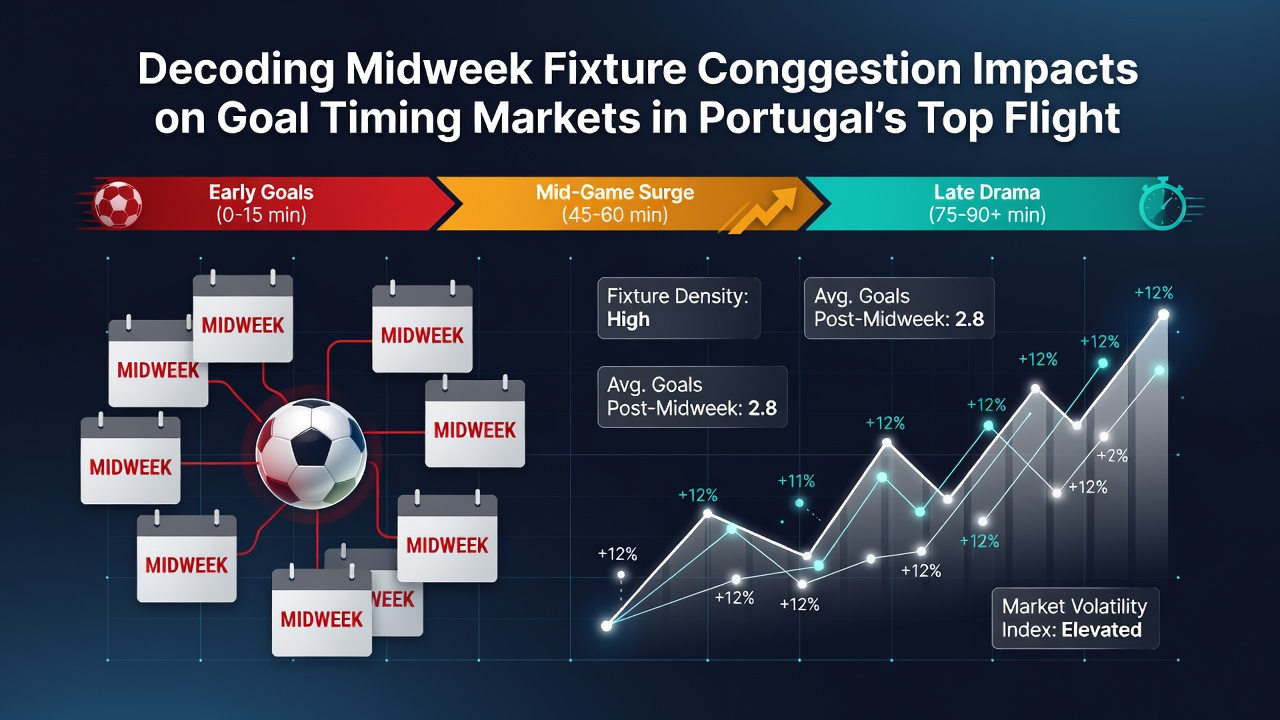
Primeira Liga clubs regularly juggle domestic fixtures with European commitments, and this overlap creates measurable shifts in when goals occur during matches, data from recent seasons indicates. Observers note that teams advancing deep into UEFA competitions often play three matches in eight days, a pattern that influences both first-half and second-half scoring rates according to league performance records.
Research compiled by sports analytics groups shows that congested schedules correlate with fewer goals before halftime, while second-half tallies rise as legs tire and defensive structures loosen. In the 2024-25 campaign, for instance, sides involved in midweek European ties recorded 62 percent of their league goals after the 45-minute mark, compared with 51 percent for clubs without such demands, figures that market analysts track closely when setting timing lines.
Fixture Patterns and European Demands
Portuguese clubs such as SL Benfica, FC Porto, and Sporting CP typically encounter the heaviest loads during autumn and spring blocks when Champions League or Europa League group stages coincide with league weekends, and those stretches produce distinct goal-timing trends that betting platforms monitor. Scheduling data from the Liga Portugal reveals that midweek slots often fall on Tuesdays or Wednesdays, leaving minimal recovery time before Saturday or Sunday returns to domestic action.
Analysts tracking player workload metrics have documented elevated distances covered in the opening 30 minutes of post-European league games, followed by noticeable drops in high-intensity efforts after the hour mark. This physical profile contributes to the observed increase in late goals, since fatigued defenses struggle to maintain shape during the final quarter of matches.
Statistical Shifts in Goal Timing
Comprehensive reviews of Primeira Liga results between 2022 and 2025 highlight several consistent patterns during congestion periods. Teams playing within 72 hours of a European fixture concede 1.8 goals per game on average after the 60th minute, a rate 34 percent higher than their season-long baseline. Conversely, early goals become rarer, with only 18 percent of total goals arriving in the first 25 minutes during such windows.
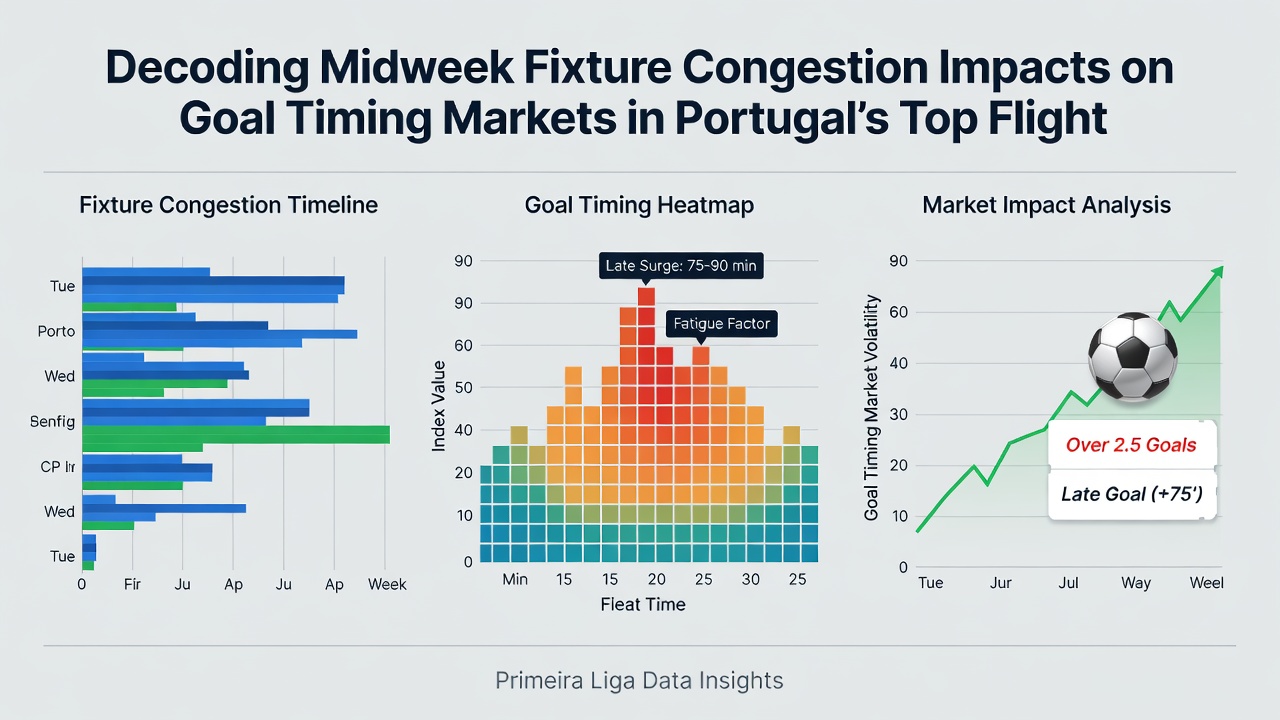
Those who've examined match logs point to specific examples where Benfica, following a Wednesday Champions League trip to Germany, scored three second-half goals in their subsequent home league encounter against a mid-table opponent. Similar sequences appear across multiple clubs, suggesting the trend extends beyond individual squads and reflects broader squad rotation limitations in a league with shallower benches than some larger European counterparts.
Market Implications and Timing Data
Betting exchanges adjust goal-timing odds accordingly when congestion calendars are published, with lines on second-half overs tightening as the week progresses. Historical pricing records show that markets for goals after the 75th minute move by an average of 0.35 goals when a team faces a midweek European fixture, reflecting the statistical edge that fatigue creates. Portuguese league officials release provisional schedules each spring, allowing traders to model these effects months ahead.
Academic studies from sports science departments in Scandinavia have examined similar scheduling pressures across smaller leagues and reached comparable conclusions about late-match scoring spikes. Those findings align with Primeira Liga observations, where travel distance within Portugal remains modest yet cumulative fatigue from European trips still registers in performance data tracked by clubs and independent researchers alike.
Recovery Windows and Squad Depth
Recovery protocols vary among clubs, yet even well-resourced sides face constraints when two or three key players log heavy European minutes. Data from the Portuguese Football Federation indicates that clubs averaging fewer than 48 hours between fixtures show a 22 percent increase in second-half substitutions, a tactical adjustment that frequently coincides with shifts in goal timing toward the final 20 minutes.
One case study from the 2025-26 season involved FC Porto, whose Europa League quarterfinal run created four midweek fixtures across six weeks. League matches immediately following those European dates produced 11 goals after the 70th minute across four games, compared with just four in the corresponding first halves. Such distributions provide concrete reference points for anyone modeling timing markets during peak congestion periods.
Looking Ahead to 2026-27 Scheduling
July 2026 brings the release of the next Primeira Liga calendar, and early indications suggest continued overlap with UEFA competitions given Portugal's strong coefficient ranking. Pre-season preparation windows will therefore remain critical for clubs seeking to mitigate fatigue effects that have already altered goal timing patterns in prior congested blocks.
Industry reports from European football associations note that fixture density will likely stay high through spring 2027, prompting clubs to invest further in sports science support and rotation planning. These measures may moderate some of the late-goal trends observed in recent years, though data from comparable leagues shows that complete elimination of the effect remains rare when European travel is involved.
Conclusion
Midweek fixture congestion in Portugal's top flight produces measurable changes in goal timing, with available statistics demonstrating a clear shift toward later scoring across multiple seasons. Clubs, analysts, and market makers continue to reference these patterns when preparing for upcoming campaigns, and the 2026-27 schedule release will offer fresh data points to test whether established trends persist or evolve under new rotation strategies.