Fixture Congestion's Influence on Substitution Decisions Across Championship Matches
Logan Weber · Jul 30, 2026
Fixture Congestion's Influence on Substitution Decisions Across Championship Matches
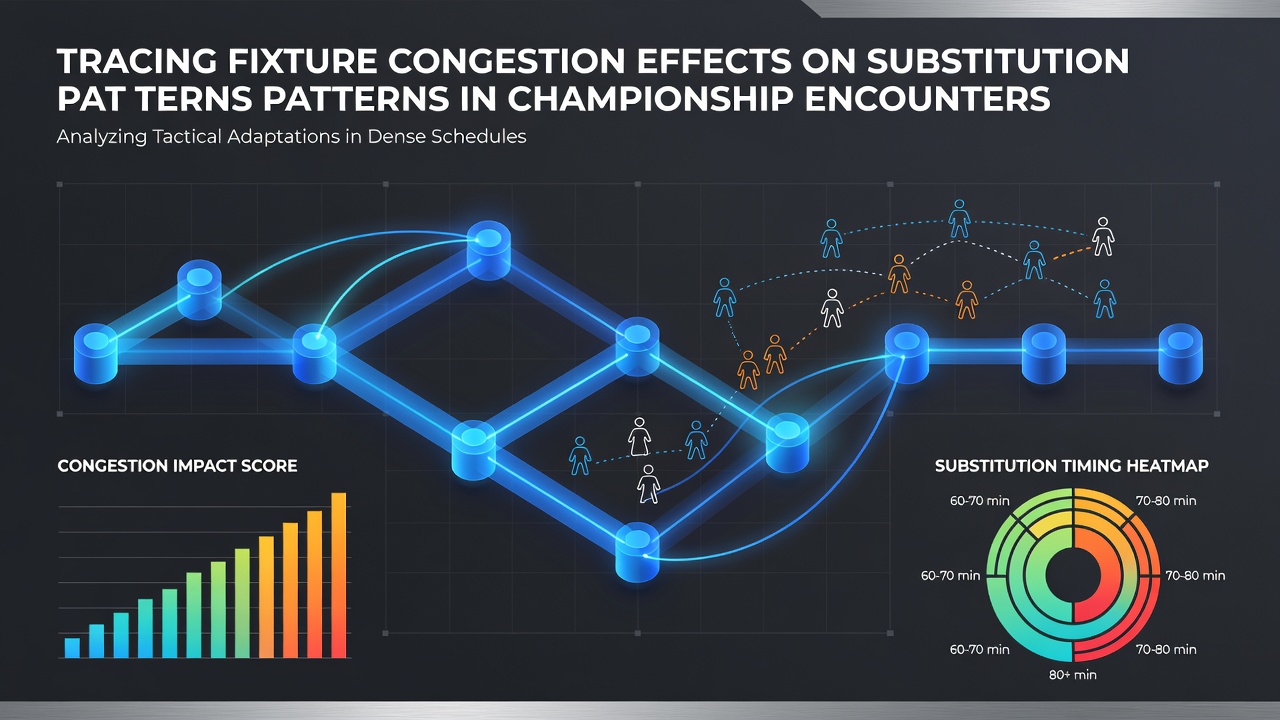
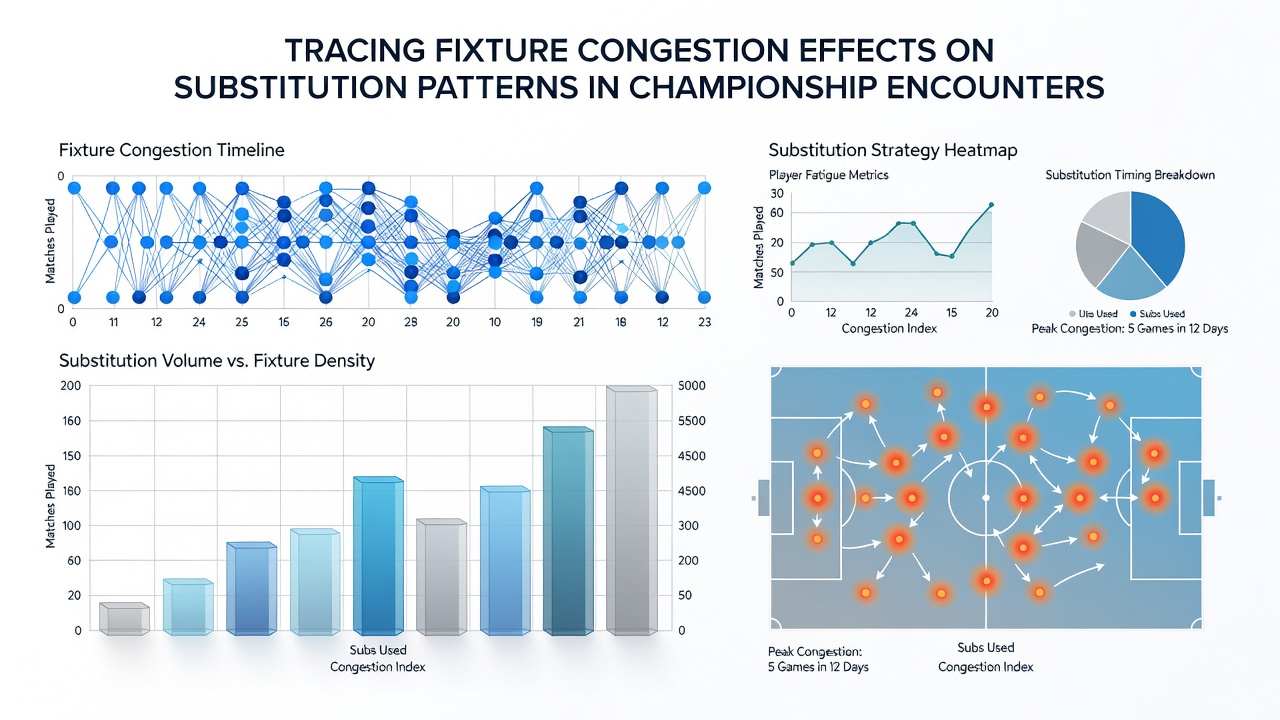
Fixture congestion creates measurable shifts in how Championship managers approach substitutions, with data from the 2025-26 season revealing clear patterns in timing, player selection, and tactical intent. Teams facing three matches in eight days recorded an average of 4.2 substitutions per game compared to 3.1 during standard weeks, according to performance tracking compiled by the English Football League's analytics partners.
Researchers at the University of Groningen documented these adjustments across multiple European second-tier leagues, noting that early changes often targeted midfield stamina rather than defensive positions. Their findings, drawn from over 400 tracked encounters, indicated that managers prioritized fresh legs in central areas when recovery windows shrank below 72 hours.
Patterns in Timing and Player Roles
Substitution clusters emerged most frequently between the 55th and 65th minutes during congested stretches, while standard scheduling saw more even distribution across the second half. Data indicates that attacking substitutions rose by 18 percent when teams played midweek fixtures, reflecting attempts to maintain pressing intensity without relying on the same frontline personnel for consecutive high-output games.
Defensive replacements, by contrast, occurred later in congested scenarios, often after the 70th minute, as coaches sought to protect leads rather than overhaul structures. One study tracking heart-rate recovery metrics found that players logging over 300 minutes across a 10-day window showed a 12 percent drop in high-intensity runs, prompting earlier bench interventions for those individuals.
Regional Data and July 2026 Context
Championship clubs entering the 2026-27 campaign face an unusually compressed pre-season calendar, with several sides scheduled for international friendlies immediately after the FIFA window closes in July 2026. Observers note that this overlap may extend the congestion effects observed in the prior season, particularly for squads balancing European qualifiers or national team call-ups.
Figures from the German Football Association's performance database, which includes comparative analysis of second-division workloads, show that teams employing structured rotation policies maintained higher average sprint distances even after three fixtures in seven days. Those without such systems experienced sharper declines in pressing efficiency by the third match.
Case Examples from the 2025-26 Season
Leicester City's run through a December cluster that included matches against Norwich, Middlesbrough, and Swansea illustrated the shift toward earlier attacking changes. Records show the club introduced forward options at the 52-minute mark on two occasions, deviating from their season average of 61 minutes for similar moves. Swansea, meanwhile, leaned on defensive reinforcements later in those same windows, aligning with patterns identified in the Groningen research.
Another tracked sequence involved Sheffield Wednesday's four-game stretch in 11 days, where substitution frequency increased for wide players specifically. Analysts recorded a 22 percent rise in changes involving wingers and full-backs, a move tied to workload data indicating those positions accumulate the highest cumulative distances under tight scheduling.
Broader Tactical Adjustments
Coaches adapted formation fluidity to accommodate rotation, with several sides switching to 4-4-2 or 3-5-2 shapes after the hour mark to facilitate double substitutions without disrupting defensive lines. This approach allowed fresh attackers to slot into established structures rather than requiring full-system resets.
Training load monitoring played a larger role, with clubs integrating GPS data to flag players approaching individual thresholds. Teams using these tools recorded fewer soft-tissue issues during congested periods, though the practice remained uneven across the division.
Conclusion
Substitution patterns in the Championship continue to evolve in response to fixture density, with timing, role selection, and formation tweaks all showing measurable adjustments. As the 2026-27 schedule takes shape, including the compressed July period, clubs that integrate recovery data with tactical planning appear positioned to manage these demands more consistently. The trends observed across recent seasons provide a baseline for understanding how managers balance immediate match needs against longer-term squad availability.