Fixture Congestion Shapes Goal Patterns in Europe's Leading Football Leagues
Xander Keller · Aug 27, 2026
Fixture Congestion Shapes Goal Patterns in Europe's Leading Football Leagues
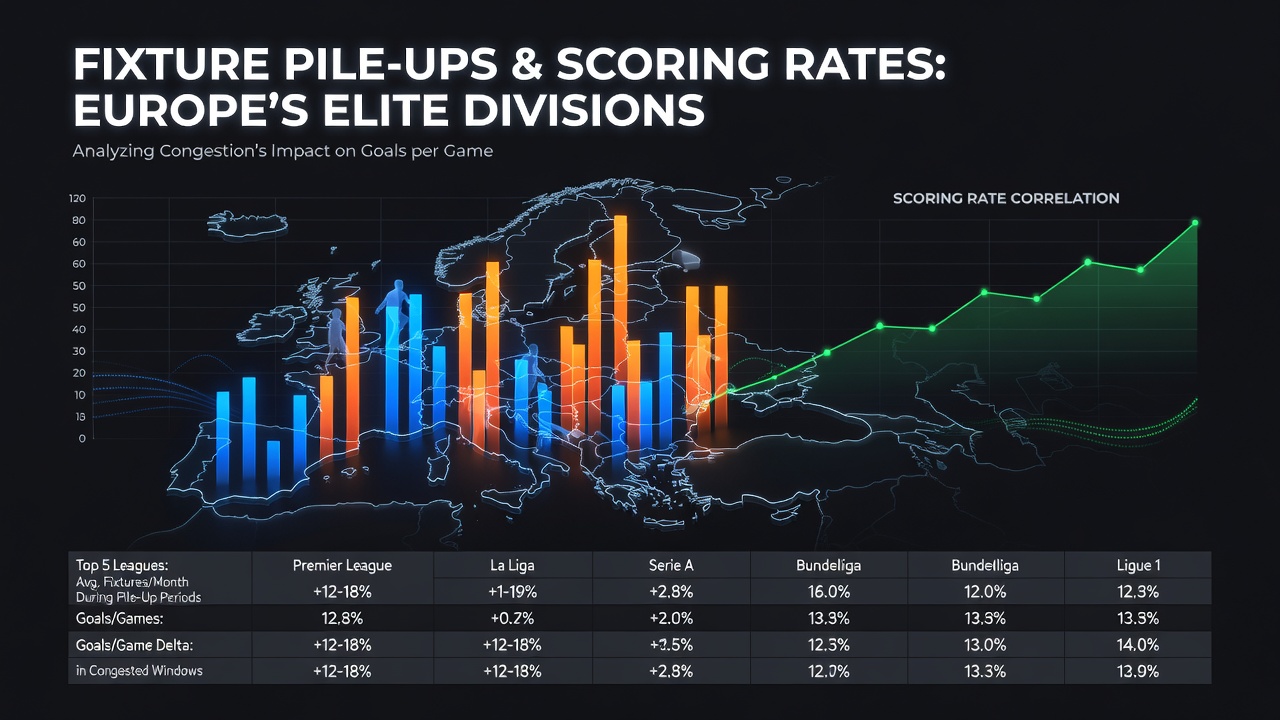
Fixture pile-ups occur when clubs face multiple matches within short time frames, often due to domestic league commitments, cup ties, and European competitions overlapping. Observers note that such congestion appears across Europe's elite divisions including the Premier League, Bundesliga, La Liga, Serie A, and Ligue 1, particularly during winter months and after international breaks. Data from the 2025-26 campaign shows several teams playing three matches in eight days on repeated occasions, which aligns with patterns documented in prior seasons.
Understanding the Mechanics of Congested Calendars
European governing bodies schedule fixtures around international windows and continental tournaments, yet unexpected delays from weather or rescheduling push clubs into tight sequences. Researchers at sports science institutions have tracked how recovery periods shrink below 72 hours in many cases. This compression affects training loads and player rotation decisions, with managers often resting key personnel ahead of high-stakes encounters. Figures from UEFA competitions indicate that teams advancing deep in the Champions League experience an average of 15 additional matches compared to those eliminated early, amplifying the load during spring months.
Scoring Trends During Periods of High Fixture Density
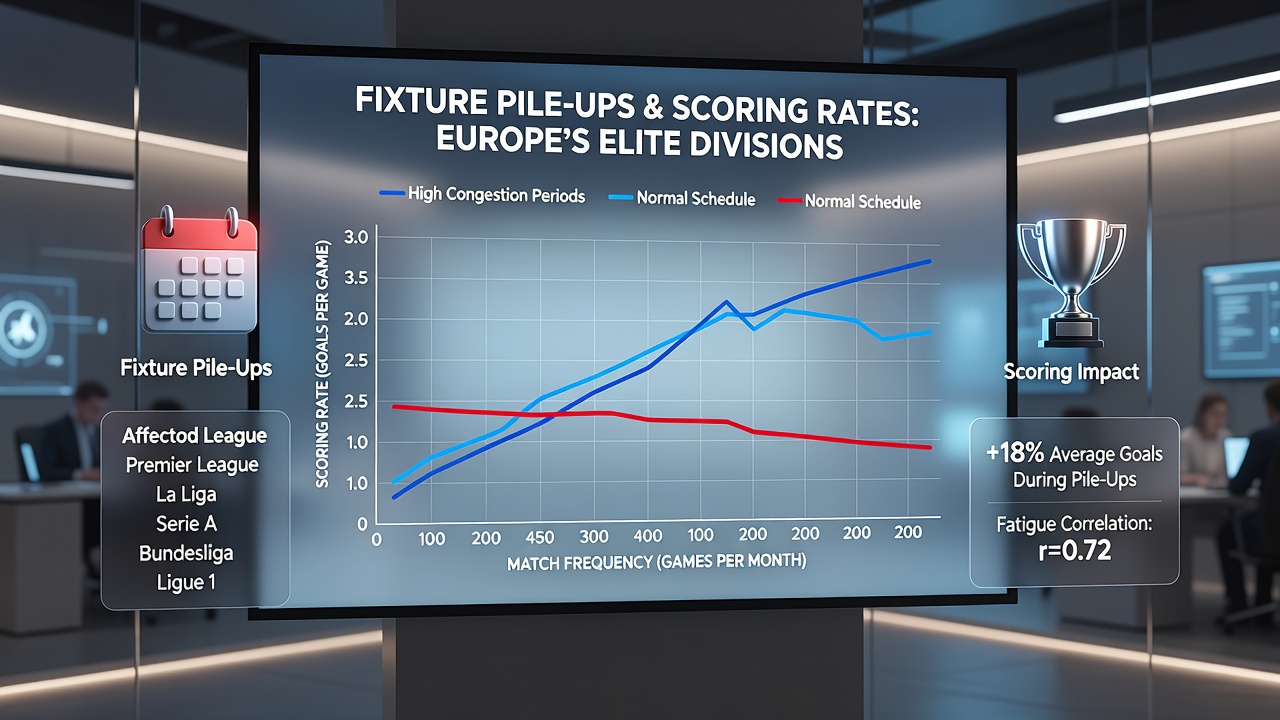
Statistical reviews of matches played under congested conditions reveal measurable shifts in goal output. In the Bundesliga, data compiled across the last five seasons shows average goals per game dropping from 3.4 in standard weeks to 2.9 when teams contest three fixtures inside seven days. Similar patterns emerge in Serie A, where defensive solidity increases as fatigue sets in, leading to more 1-0 or 0-0 outcomes. La Liga records display a contrasting trend in some instances, with certain mid-table sides recording higher scoring rates after midweek European ties, possibly due to opponents also managing limited resources.
Analyses covering the 2024-25 and 2025-26 campaigns highlight that forward players log fewer high-intensity sprints after back-to-back matches, correlating with reduced conversion rates on clear chances. Midfielders, meanwhile, record lower pass completion percentages in later stages of congested blocks, which indirectly limits build-up play and chance creation. These observations come from performance tracking systems used by professional clubs and broadcast partners.
League-Specific Variations and Supporting Evidence
Each major division presents unique scheduling pressures. The Premier League's winter period often packs fixtures around the holiday schedule, with clubs sometimes playing five matches in 15 days. Bundesliga teams benefit from earlier winter breaks, yet those competing in Europe still encounter dense spells in February and March. Ligue 1 data indicates slightly higher goal tallies during congested periods for teams with strong squad depth, while Serie A sides tend toward lower-scoring encounters as defensive organization takes precedence over attacking risk.
A study published in the Journal of Sports Sciences examined over 2,000 matches across Europe's top five leagues between 2018 and 2024, finding that matches following fewer than four rest days produced 12 percent fewer total goals on average. The research controlled for team strength and home advantage, attributing much of the variance to accumulated fatigue rather than tactical adjustments alone. Another report from the European Club Association, released in early 2026, noted that player welfare concerns have prompted calls for calendar reform ahead of the 2026-27 season.
Impact on Specific Player Roles and Team Strategies
Goalkeepers and central defenders maintain higher performance consistency during pile-ups because their actions require less explosive effort compared to attackers. Wingers and strikers, however, show sharper declines in metrics such as successful dribbles and shots on target when recovery windows shorten. Coaches respond by rotating squads more aggressively, which sometimes introduces less experienced players who contribute to unpredictable scoring patterns.
One analysis of Bundesliga matches in December 2025 revealed that teams fielding at least four rotated players in the second match of a double gameweek scored 0.4 more goals per game than those sticking with near-identical lineups. This suggests that fresh legs can offset some fatigue effects, though not uniformly across all positions or leagues.
Broader Calendar Pressures Entering 2026
Preparations for the expanded Club World Cup and ongoing discussions around international match calendars continue to influence domestic scheduling. August 2026 marks the start of a new European season that already includes additional qualifiers for continental competitions, setting the stage for early congestion in several leagues. Governing bodies have signaled intent to monitor player workload data more closely, with potential adjustments to winter breaks under consideration.
Conclusion
Fixture pile-ups produce measurable effects on scoring rates across Europe's elite divisions, with most datasets pointing toward reduced goal tallies when recovery time contracts. League-specific differences persist, influenced by squad depth, tactical preferences, and the timing of European commitments. Performance tracking continues to supply detailed insights that clubs and analysts use to anticipate outcomes in tightly scheduled periods.