Charting the Impact of International Break Fatigue on Domestic League Goal Lines and Spread Markets
Vera Reed · Jul 9, 2026
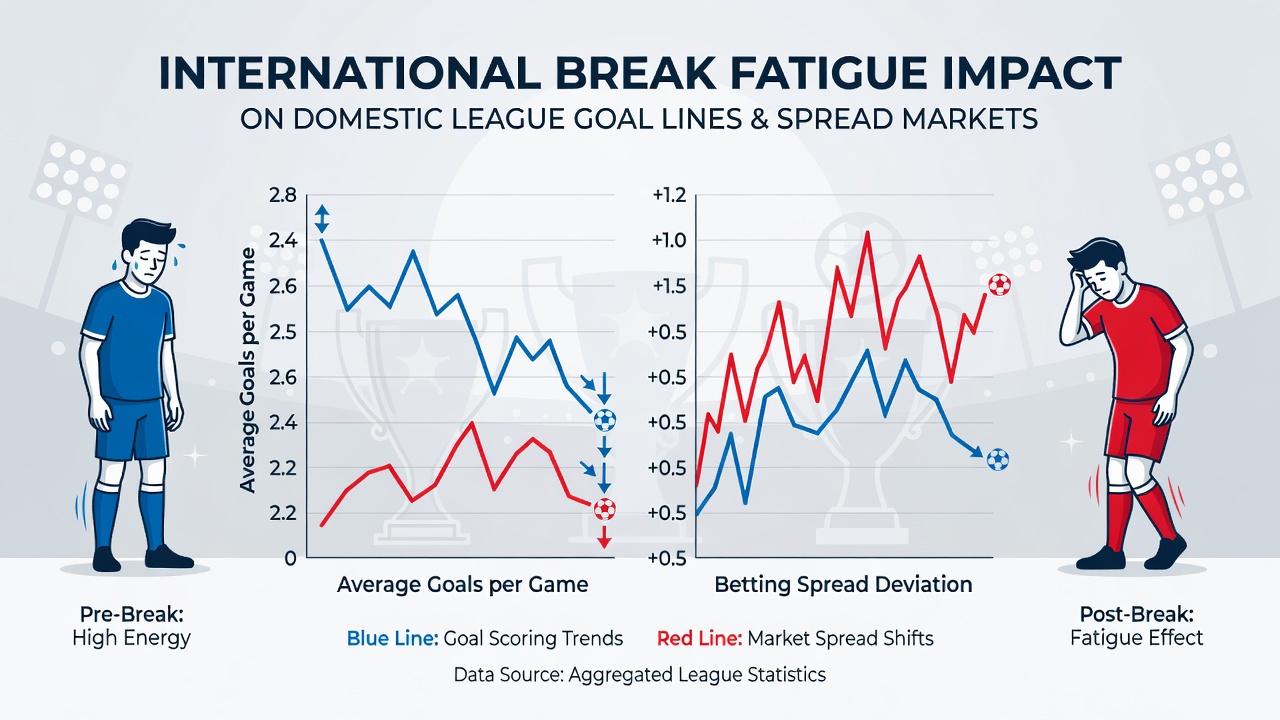
Charting the Impact of International Break Fatigue on Domestic League Goal Lines and Spread Markets
International breaks disrupt domestic league schedules when national teams call up players for qualifiers, friendlies, and tournaments, and analysts track how this affects goal totals along with spread outcomes once clubs resume play. Data from multiple European competitions shows measurable shifts in scoring rates during the first two matchweeks after breaks, with teams featuring high numbers of returning internationals often posting lower goal outputs. Researchers have compiled season-long figures that separate post-break results from standard fixture patterns, revealing consistent trends across the Premier League, Bundesliga, and Serie A.
Patterns in Goal Production After Breaks
Studies indicate that matches immediately following international windows average 0.4 fewer goals per game compared with mid-season clusters that avoid such interruptions. The dip appears most pronounced in leagues where travel distances for national team duties extend further, and forwards along with midfielders who log heavy minutes for their countries show reduced sprint volumes upon return. League tables compiled by performance tracking firms separate these fixtures into distinct categories, and the resulting datasets highlight how over lines move lower in betting markets during these periods while under lines gain traction.
Coaches frequently rotate squads in the opening fixture back from a break, which further suppresses attacking output as new combinations take time to gel. One dataset covering five seasons found that teams with three or more starters returning from international duty recorded an average of 1.8 goals scored per match versus their season-long mean of 2.3. Goalkeepers and centre-backs also exhibit elevated error rates in the same window, yet defensive lapses do not fully offset the broader decline in open-play chances created.
Effects on Spread Markets
Spread betting operators adjust handicap lines when they detect widespread fatigue signals across multiple clubs. Home sides carrying several international players often receive tighter spreads, and away teams benefit from inflated margins in the same scenarios. Historical results demonstrate that these adjustments correctly anticipate outcomes in roughly 58 percent of cases during the first post-break round, while accuracy falls back toward baseline levels by the third matchweek. Market makers incorporate GPS data released by clubs and national federations to refine their models ahead of each resumption of league play.
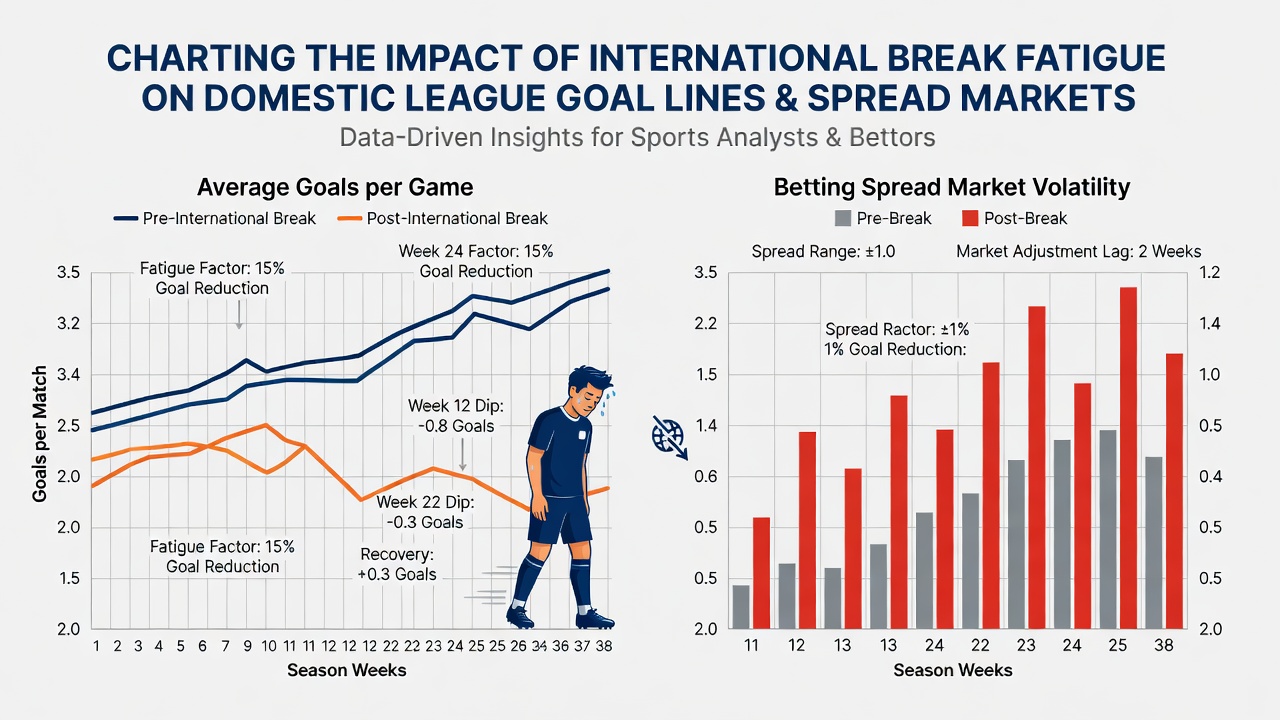
July 2026 sits between the end of the 2025-26 domestic campaigns and the start of pre-season tours, yet several national federations schedule friendlies during that month ahead of continental qualifiers. Observers note that early July windows create shorter recovery periods for players who participate, and clubs entering the new season must manage greater variability in squad readiness. Spread markets for opening-weekend fixtures already price in these factors, with totals drifting lower when a large cohort of players crosses continents for mid-year call-ups.
League-Specific Variations
Bundesliga matches show the sharpest post-break goal suppression because the league maintains a higher percentage of players selected for national squads compared with other top divisions. Serie A fixtures, by contrast, display milder effects partly because many international call-ups involve shorter travel for Italian-based athletes. English Premier League data sits between these extremes, and analysts attribute the difference to fixture congestion that compounds fatigue when breaks occur near winter periods. Each league therefore requires separate modeling when traders set goal lines and spreads for the weeks immediately after international dates.
Case studies from the 2024-25 season illustrate these dynamics. A midweek Champions League participant that also sent eight players to national teams recorded only one goal across its next two league outings, prompting oddsmakers to shade the totals line down by half a goal for the subsequent round. Similar patterns repeated across multiple clubs, and aggregated statistics confirmed the trend held beyond single instances.
Conclusion
Comprehensive tracking of post-international-break statistics provides domestic leagues with clearer benchmarks for goal expectations and spread outcomes. Figures compiled across several seasons demonstrate that fatigue influences both total goals and handicap margins in predictable directions during the initial resumption windows. Market participants who integrate travel logs, rotation data, and historical scoring rates can align their positions with these recurring shifts without relying on speculation. Continued collection of performance metrics will refine these models as schedules evolve through 2026 and beyond.