Andean Elevation Challenges: How Height Above Sea Level Influences Goal Scoring in Regional Football Leagues
Vera Reed · Oct 13, 2026
Andean Elevation Challenges: How Height Above Sea Level Influences Goal Scoring in Regional Football Leagues
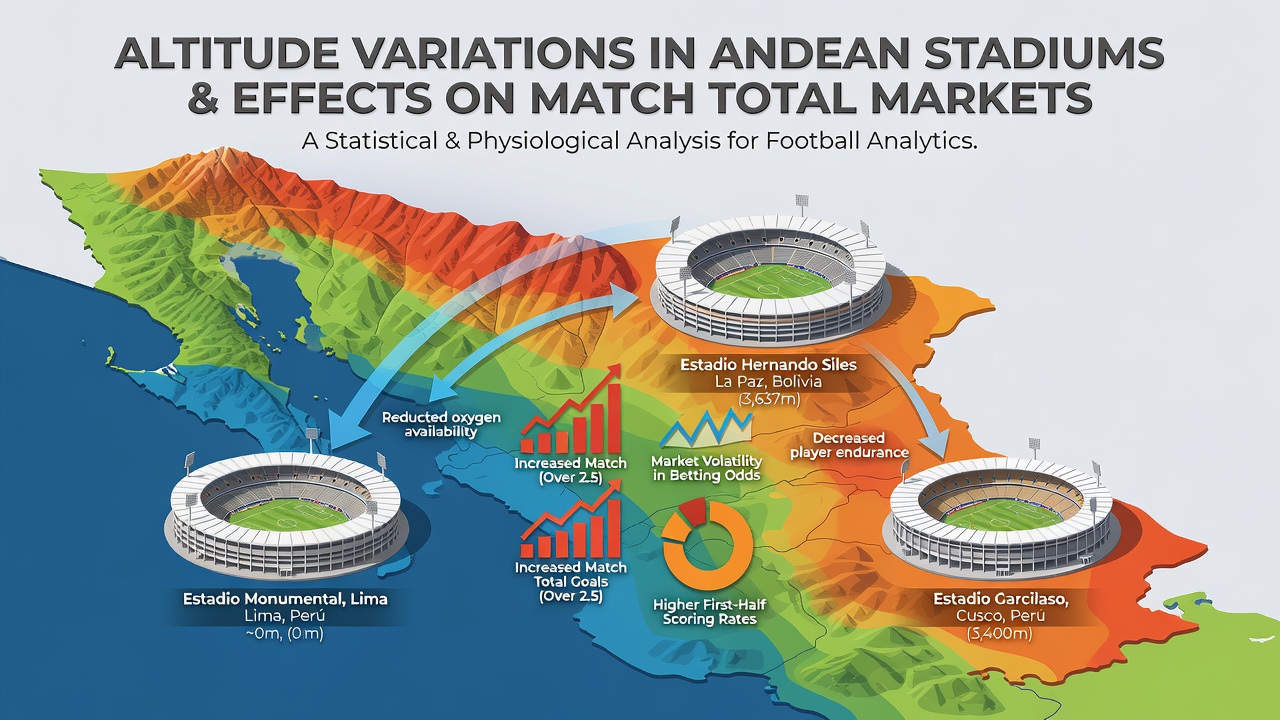
Stadiums perched in the Andes create distinct conditions for football matches because of reduced oxygen levels and thinner air, factors that alter player endurance along with ball trajectory. Venues in La Paz, Quito, and Cusco sit between 2,800 and 3,650 meters above sea level, while many opposing teams arrive from near-sea-level locations and face immediate physiological adjustments. Match total markets, which focus on over or under a set number of goals, register measurable shifts when these elevation differences come into play.
Physiological Demands at Elevation
Players experience lower partial pressure of oxygen at these heights, which reduces aerobic capacity and accelerates fatigue during sustained running efforts. Studies from sports science institutions in South America show that visiting squads often record 10 to 15 percent drops in high-intensity distance covered after the 60-minute mark. Home sides, accustomed to the thinner air, maintain steadier work rates and exploit late-game lapses more frequently. These patterns appear consistently in CONMEBOL competition logs across multiple seasons.
Coaches adapt lineups and substitutions to counter the effects, often favoring players with prior altitude experience or those suited to shorter, high-tempo bursts rather than prolonged pressing. Data collected by regional medical panels indicate that acclimatization periods of 48 to 72 hours produce noticeable recovery in heart-rate recovery times, yet full adaptation rarely occurs within a single match week.
Ball Flight and Technical Adjustments
Reduced air density changes how the ball travels through the air, increasing carry distance on long passes and shots while diminishing swerve on curved deliveries. Goalkeepers report altered reaction windows on crosses and set pieces because the ball arrives faster and with less predictable dip. Midfielders adjust passing ranges, favoring ground strokes or lofted balls that exploit the extra distance rather than intricate combinations that demand precise control. These technical modifications appear in match footage analyzed by coaching staffs throughout Bolivia and Ecuador.
Scoring Patterns Across Seasons
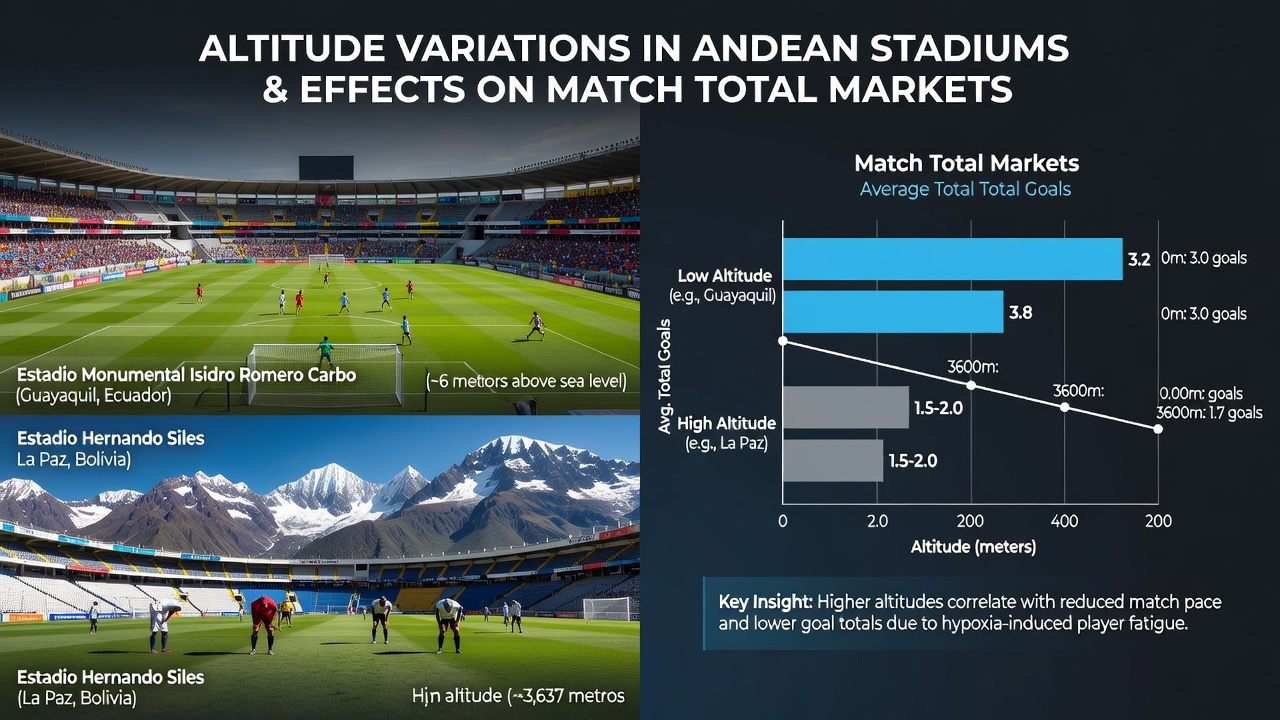
League and cup records reveal that matches hosted at elevations above 2,500 meters average 0.4 fewer total goals than equivalent fixtures played at lower altitudes within the same competitions. The gap widens in the second half, when cumulative oxygen debt compounds for visiting teams. Figures released by the Bolivian Football Federation and cross-referenced with Ecuadorian league statistics show under-2.5-goal outcomes occurring in 58 percent of home games for clubs based in La Paz and Quito during the 2024 through 2026 campaigns.
Visiting sides that attempt high-pressing styles early often concede space later, yet the same teams sometimes produce low-scoring draws when they adopt compact defensive blocks from the outset. Researchers tracking Copa Libertadores group-stage results note similar trends, with goal tallies dropping further when matches occur in quick succession without adequate recovery time between fixtures.
Market Implications for Totals Betting
Betting exchanges and bookmakers adjust total-goal lines when high-altitude venues appear on schedules, typically lowering the benchmark by half a goal compared with lowland fixtures. Historical datasets compiled by performance analytics groups indicate that these adjusted lines still produce under outcomes at rates above 52 percent across the past three full seasons. Sharp bettors monitor travel schedules and recent altitude exposure for visiting squads because those variables correlate with further reductions in open-play goals.
October 2026 fixtures already scheduled in the Andean region follow the same established patterns, with several clubs publishing acclimatization protocols that include training camps at intermediate elevations. Observers following South American football note that such preparations correlate with modest increases in total goals when the visiting side has completed at least three days at altitude before kickoff.
Regional Comparisons and External Data
Comparisons with matches played at moderate altitudes in other parts of the continent, such as those documented in Argentine and Chilean league reports, show smaller deviations from baseline goal averages. A joint study released by the University of the Andes and an Australian sports research institute found that the most pronounced effects concentrate above 2,800 meters, where oxygen saturation drops below 85 percent for unacclimatized athletes. These thresholds align with the locations of the most extreme venues in Bolivia and Ecuador.
Weather variables interact with elevation as well. Lower humidity at height can further dry playing surfaces, increasing ball speed across the turf and occasionally producing more long-range attempts that either miss or find the net from distance. League statisticians have logged a slight uptick in goals from outside the penalty area during dry-season fixtures at these stadiums.
Conclusion
Altitude variations in Andean stadiums produce consistent, quantifiable effects on match dynamics that directly influence goal totals. Reduced oxygen availability, modified ball behavior, and tactical adaptations combine to lower average scoring outputs, particularly in the latter stages of games. Data from multiple governing bodies and academic sources confirm that these patterns persist across domestic leagues and continental competitions through 2026. Bettors examining total markets benefit from tracking travel logistics, acclimatization windows, and historical venue-specific averages when assessing lines for upcoming fixtures.