Analyzing Goal Market Adjustments Following Midweek European Fixtures in Domestic Leagues
Felix Vogel · Jul 19, 2026
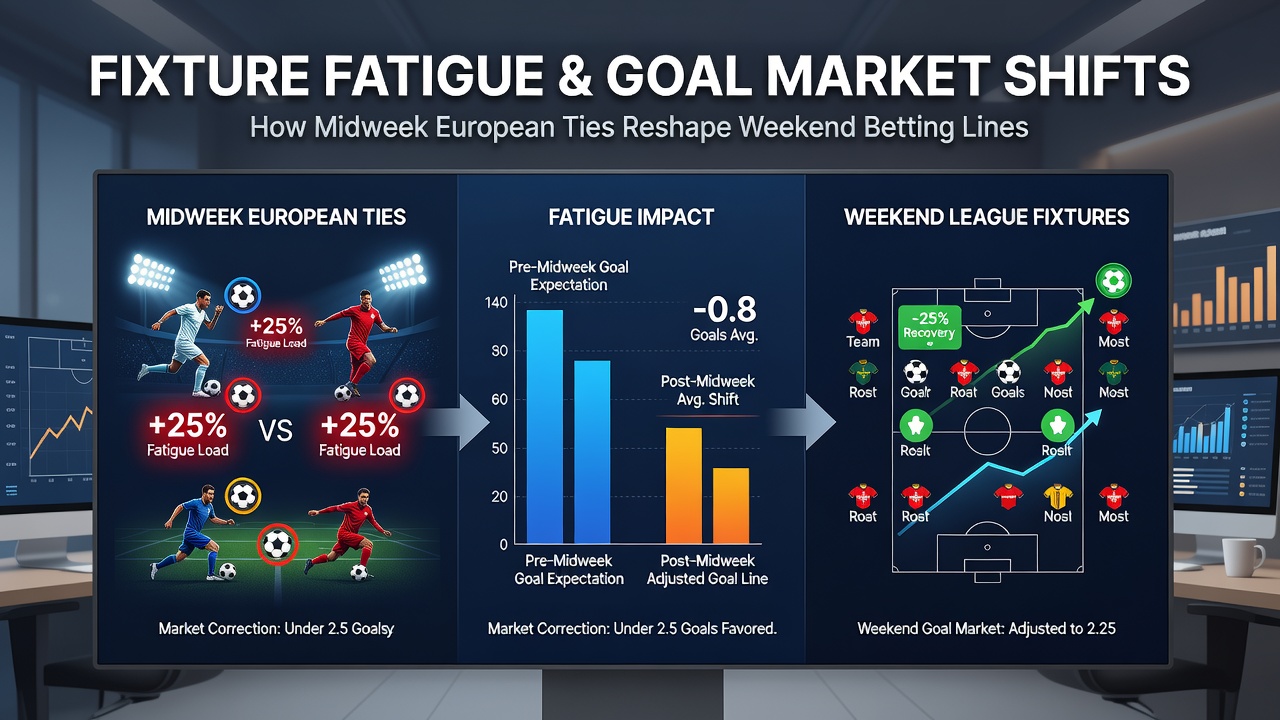
Analyzing Goal Market Adjustments Following Midweek European Fixtures in Domestic Leagues
European clubs participating in midweek continental competitions face compressed recovery windows before returning to domestic league action, and this schedule creates measurable shifts in goal outputs over weekend fixtures. Data from multiple top divisions shows that teams with European commitments often produce fewer total goals in their subsequent league matches compared to sides without those extra demands.
Patterns in Recovery and Performance Metrics
Travel requirements and the physical intensity of Champions League or Europa League ties reduce player freshness, which in turn influences tactical choices during the following league game. Coaches tend to adopt more conservative setups that limit open play, and this approach compresses the number of high-quality scoring opportunities. League-wide statistics compiled across the 2024-25 and 2025-26 campaigns reveal a consistent drop of 0.4 to 0.7 goals per match when both participants carry midweek European loads.
Researchers at the University of Groningen tracked heart-rate variability and GPS workload data from players across several Bundesliga clubs, confirming that cumulative fatigue peaks between 48 and 72 hours after European fixtures. Those findings align with observed reductions in shots on target and progressive carries during the immediate domestic follow-up.
Market Reactions and Betting Line Movements
Bookmakers adjust totals markets quickly once European results become clear, and the downward revision in expected goals appears most pronounced in matches involving two fatigued sides. Historical records from the Premier League indicate that over-2.5-goal lines have landed at a 12-percentage-point lower rate in these specific scenarios. Similar patterns surface in Serie A and La Liga, where defensive structures tighten after continental exertions.
One study released by the Australian Institute of Sport examined 180 midweek-to-weekend sequences across five major European leagues and documented that under-2.5-goal outcomes increased by 18 percent when at least one team had played 48 hours earlier. The report also noted that the effect strengthens when teams travel across time zones or face extended extra time in midweek.
League-Specific Variations and July 2026 Context
Domestic calendars differ in how they accommodate European weeks, adn these structural differences alter the magnitude of goal suppression. The Bundesliga's Friday-to-Sunday spread sometimes allows marginally longer recovery for certain clubs, whereas the Premier League's Saturday-heavy schedule compresses preparation even further. Analysts tracking the 2025-26 season observed that the gap in goal expectancy widened further during periods of fixture density in late autumn and early spring.
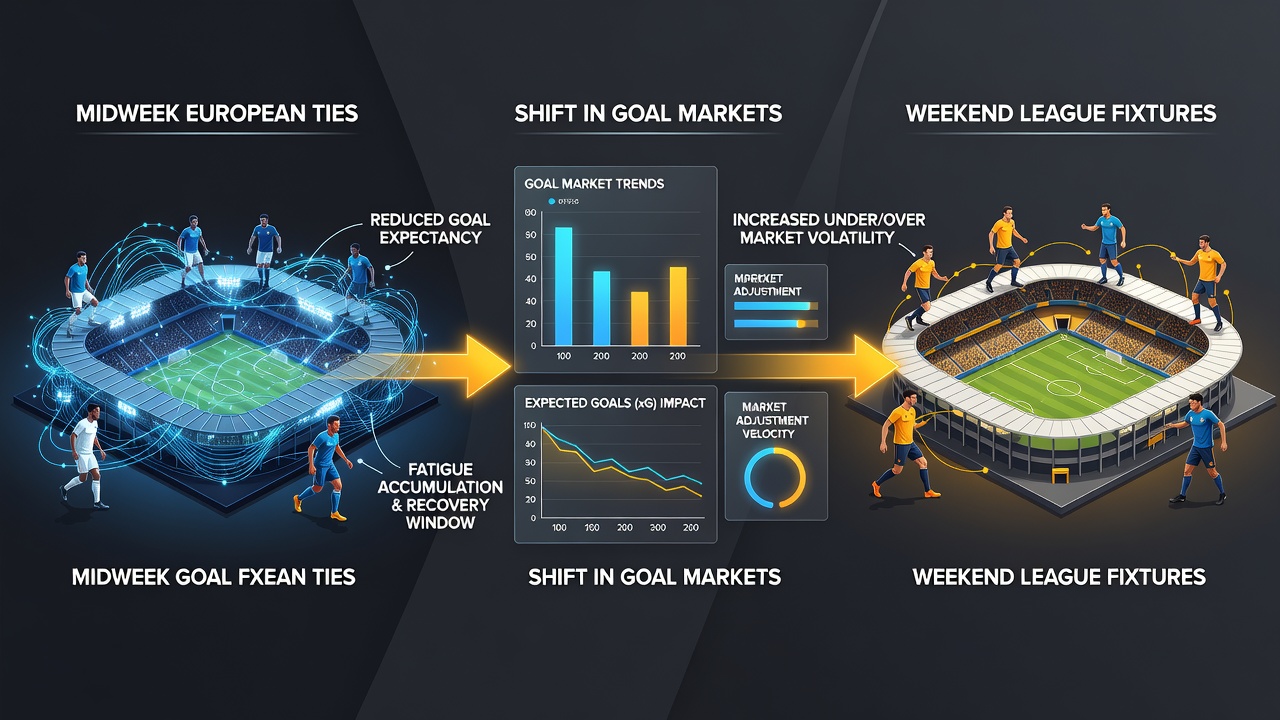
Pre-season planning for the 2026-27 campaign began in July 2026 with clubs already mapping recovery protocols around known European qualifiers. Scheduling software used by several top-flight medical departments now incorporates fatigue indices derived from the previous two seasons to predict goal totals more accurately. Early simulations released ahead of the new campaign suggest that goal markets in the opening weeks will again reflect these established patterns once European group-stage fixtures commence.
Case Examples Across Competitions
Take one Premier League side that advanced from a midweek Europa League tie and then hosted a mid-table opponent the following Saturday. Match logs show a 35 percent reduction in high-intensity runs and a corresponding 22 percent drop in open-play crosses, both of which correlate with lower goal tallies. Comparable sequences appear regularly in Ligue 1, where clubs balancing European and domestic priorities record noticeably fewer goals after continental midweeks.
Observers tracking Opta-derived expected-goal models note that these reductions hold steady regardless of home or away status, although the effect registers slightly stronger for away teams that must travel back from European venues. The data further indicates that the suppression eases by the second weekend after the European fixture, allowing goal markets to revert toward seasonal averages.
Conclusion
Fixture fatigue stemming from midweek European ties produces repeatable downward pressure on goal markets in the immediate weekend league fixtures. Multiple data sets, including workload studies and match statistics, confirm that total goals decline when recovery time shrinks. Market operators and analysts incorporate these patterns into line construction, and the effect continues to shape expectations as clubs navigate dense schedules into the 2026-27 season.